

The National Retail Federation (NRF) expects Halloween spending to reach $13.5 billion in 2026, up from $13.1 billion last year. That’s roughly $115.14 spent on Halloween costs per person in 2026, which is just a touch higher than the $114.45 spent in 2025.
The increase in spending is probably not a surprise to anyone, since there have been cost increases in just about every area of the average American’s life.
Pumpkins are to Halloween what the Douglas fir or Spruce trees are to Christmas. Even if you don’t participate in trick-or-treating or dress up, one of the things you may do is get a pumpkin or two for carving.
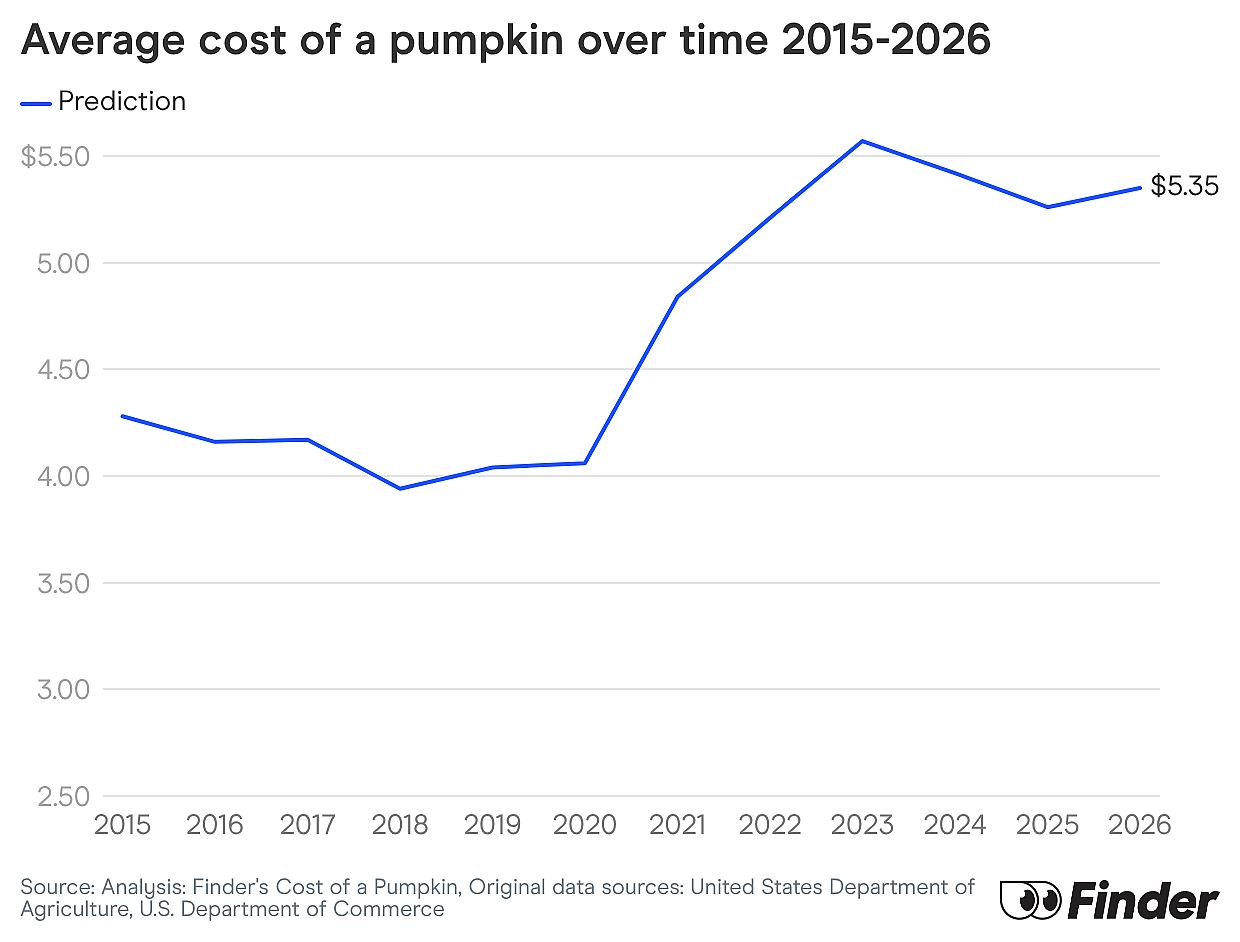
According to Finder research, the average carving pumpkin will cost $5.35 this year, up from $5.26 in 2025. In 2020, the average was $4.06, so pumpkin prices have climbed about 32% in six years.
The NRF estimates about 144 million Americans, or roughly 42% of the population, plan to buy a pumpkin to carve this year. However, the number of Americans who say they’ll be carving a pumpkin in 2026 is far lower than the 56% in 2025. That drop means total pumpkin spending is projected to fall to about $771 million, or around 7% less than the $829 million spent last year.
NRF breaks down this year’s spending across four main categories:
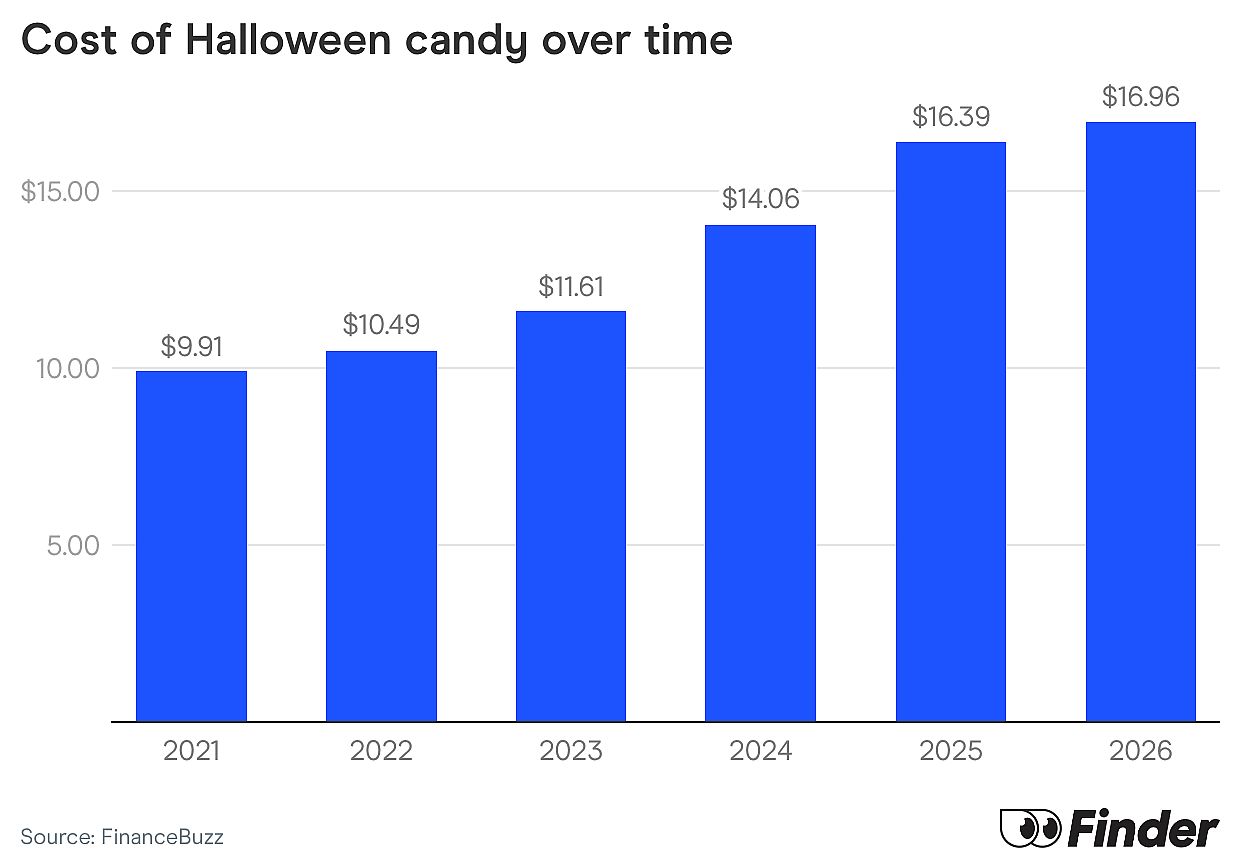
Candy, like everything these days, is not immune to inflation. In fact, the cost of candy is outpacing inflation. Since 2021, the cost of a 100-piece bag of assorted Halloween candy has risen by 71%, according to a FinanceBuzz study. The national inflation rate over that same period is just 22%.
In 2026, that 100-piece bag of candy averages out at $16.96, up roughly 3.5% from the $16.39 in 2025 and up $7.05 from 2021, when it would have run you just $9.91.
Halloween is just the first cab off the rank in the holiday season. Thanksgiving, Black Friday, Cyber Monday and all the December festivities can leave your wallet hurting, especially following a $115 Halloween bill. Planning for the whole season at once, instead of one holiday at a time, can stop you from being caught off guard.
Build one budget for the whole season
Instead of budgeting for each holiday separately, set a single spending limit that covers October through December, then divide it among costumes, travel, meals and gifts. A budgeting app can track where the money is going so you notice early if Halloween eats into your gift budget.
Set the money aside ahead of time
Putting your money into a separate account, preferably a high-yield savings account, lets that money earn interest until you need it. Starting a little earlier next year makes the season easier to fund.
Be careful with credit and buy now, pay later
A cash back debit card can earn rewards on holiday purchases, but only if you pay the balance in full. Interest charges can quickly cancel out any rewards. The same goes for buy now, pay later plans: splitting a purchase into installments is convenient, but several plans running at once can be hard to keep track of over the holiday period.
Consider a Christmas club account
A Christmas club account is a type of savings account offered by some banks and credit unions. You make regular deposits throughout the year and the balance is paid out for holiday shopping. The structure makes it harder to dip into your holiday fund early, but the major drawback of Christmas clubs is that they generally pay less interest than high-yield savings accounts, and may have fees or penalties for early withdrawals.
Americans are expected to spend a scary $13.5 billion on Halloween this year, but that money doesn’t stretch as far as it used to. Setting a budget, shopping secondhand and reusing what you have can help you celebrate the season without such a terrifying bill.
This guide has been edited by Megan B. Shepherd.
This story was produced by Finder and reviewed and distributed by Stacker.


